
Revisiting A Joyous Pilgrimage
Revising notes from a decade-old spiritual journey

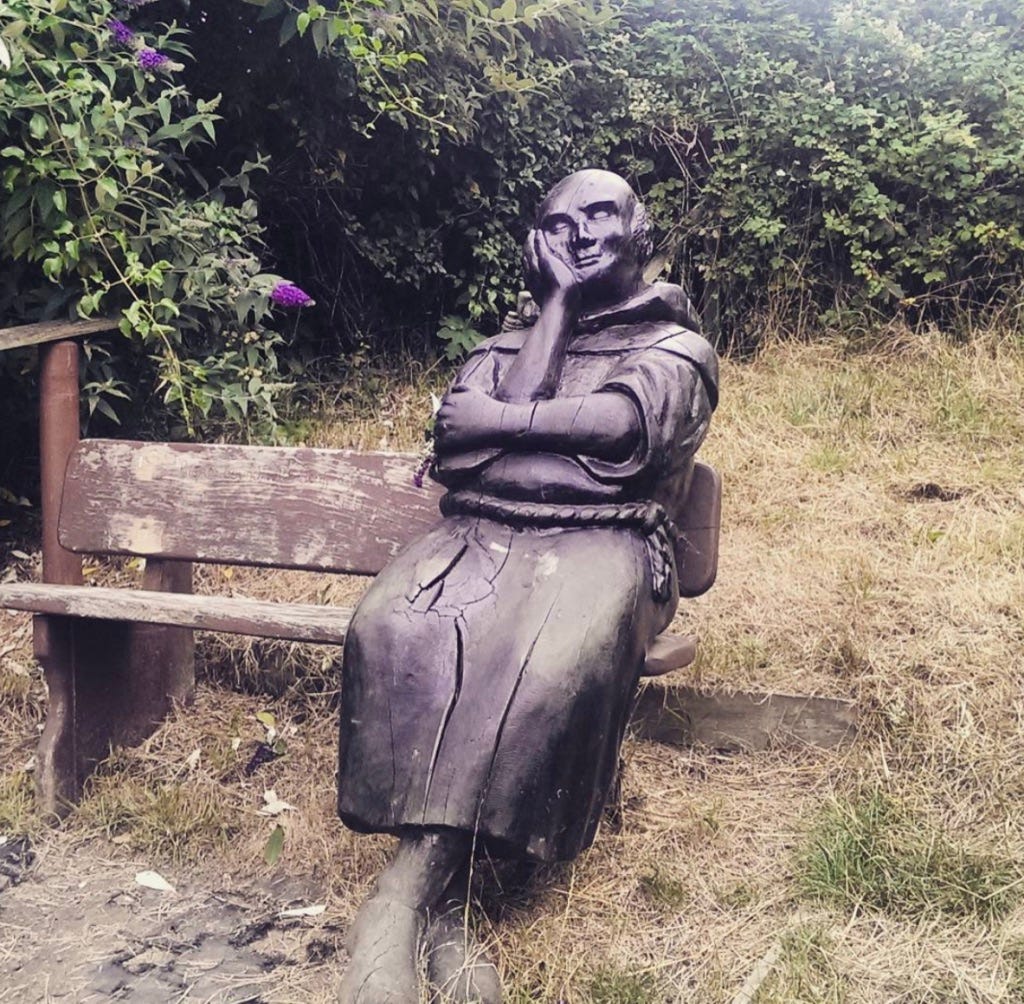
A very consoling pilgrim I met during a particularly solitary three to four hours of walking in the woods and without seeing any other people.
It is incredible to me that over ten years ago, with gracious funding from my graduate program, I set off on a month long amateur spiritual exploration of England. One part of that journey was walking the famous (and famously unused) pilgrimage route from Winchester to Canterbury (made famous by The Canterbury Tales, sort of.)
I spent 8-9 days walking about a 130 miles, getting lost a lot, asking for help from strangers, getting welts on my lower back from an overly-heavy backpack, and staying in very old, quaint inns at night along the way (for I wasn’t hearty enough to do wild camping.) Indeed, the trip was meant to be fairly cozy and comfortably athletic (despite one 22 mile walk day with a 40 pound bag). And through it all, an unusual sense of peace and lightness filled me. Of course, that’s to be expected!
One other miraculous consequence of such a month-long privilege was that I realized that the specific books I had studied that year with my amazing mentors, and the beautiful land I was walking through with those books reverberating through them, and the other poems and prayers and reveries in my head all cohered into a transformed version/vision of me. It was a version that felt like a turning, a flowering, a clarifying. And a version powerfully prophetic of later versions and visions, like this one that I’m living while telling you this.
What transfigured self shone through then? A questing-self beholden to an ongoing vision of pilgrimage, of pilgriming, as a way through and with life. Of the pilgrim-concept as an adaptable poetics of engagement and learning. An idea that has come to envelop so much and to clarify and reveal so much.
A book slowly arose from that trip and also from related trips. A book I’m trying to do final revisions on. So I’m sharing parts, now, from a revised journal of that long walk that is also a conversation with the “guides and spirits” along the way. All photos are mine from that walk over a decade ago.
**************************************************************************
1.At my surrogate origin, Winchester Cathedral, I wore all the nerves of wedding day, marriage forever pending. From the future the wedding existed – a guiding image of union, of bees, of flowers, honey, head-dresses.
Now: cold, Gothic, empty interiors.
Grey, grizzly morning. From the outside, the gothic lines were stark, while within someone in the wings played gloomy organ music. The kind yet overworked vicar welcomed me, surprised that I’m doing my long pilgrim’s walk alone. They gave me a pilgrim passport and encouraged me, as I had heard to get it stamped at various shops and churches along the way. You might not see many people, he said.
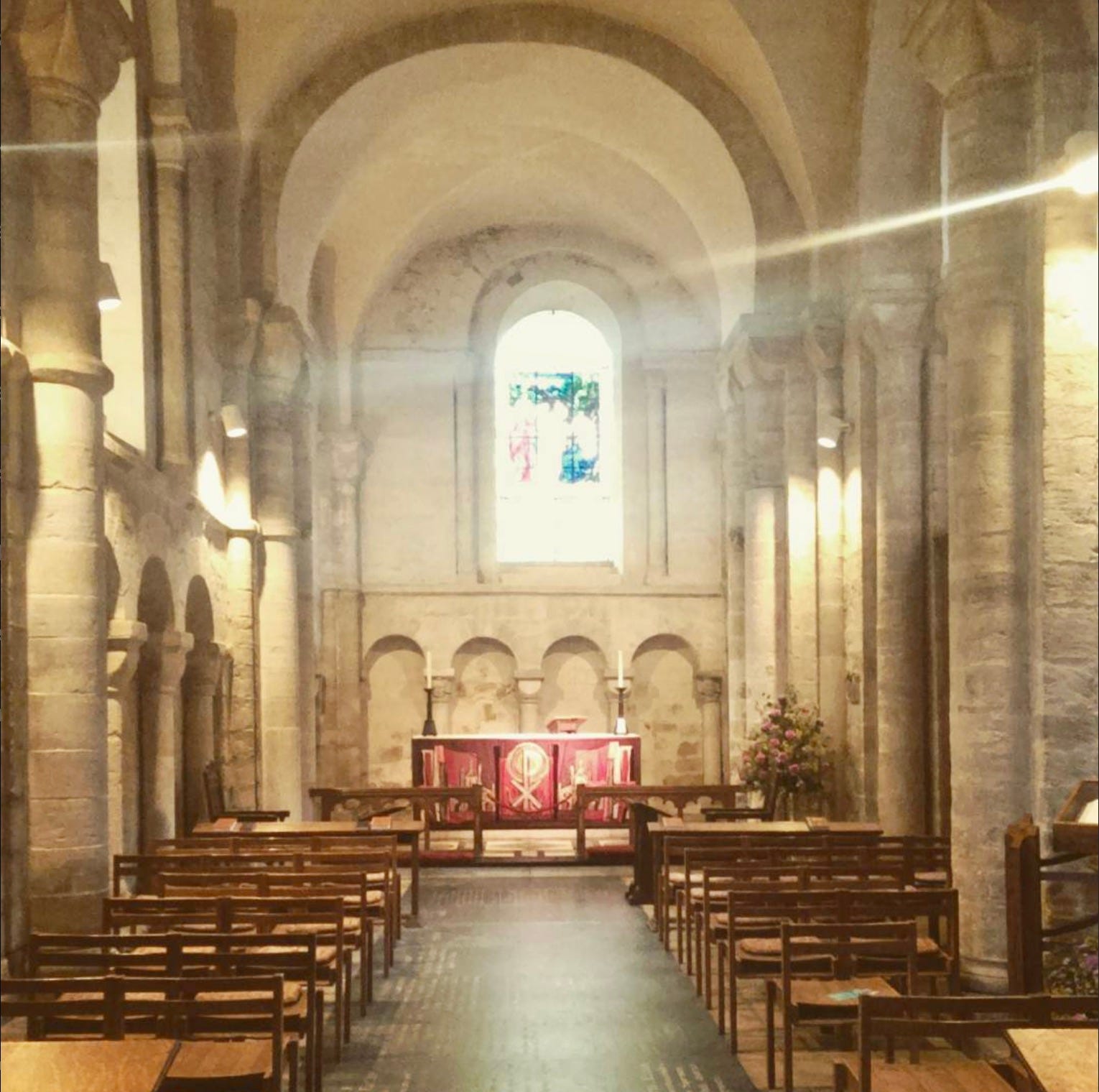
What is the pilgrimage for?
Commemorating the death of a man. The ampulla or small leaden flask was an integral part of the pilgrim ritual. Once Beckett was murdered, a holy friend or companion was sent with a little vial to collect his blood and brains. Hence, the collection of martyr blood in small vials becomes a sign. A sign for pilgrims. Wayfaring with the blood and vital essence of another. The blood was said to cure a woman who was paralyzed. The blood was said to heal blindness. Thus the leaden bottle hung round the neck becomes talisman, a vector for miracles.
No talismans except this green-gold unfolding England.
The lone wayfarer without headphones, a working GPS, with limited technological distractions along the way. The wanderer’s heart flooded, every hour, with images of past loves now revived. I never want to be saddled with too many objects that I might have to think about. Never one to wear a watch. The woods and rivers we’d rather focus on – branchings of the mind but different minds, too – wearable gems for the eyes.
6. Naturing never witnessed, only swallowed up by—
Wonderful/horrifying sensation of feeling – of knowing! – you are backtracking.
The familiar gruesomeness of that same tree, that same vine.
Circular errantry: dream-logic. Comparing your footfalls amongst all the clouding flies with the little line by the water on your map. then discovering – a tree talisman, a shining hieroglyph in the woods – the distinct yellow arrow of PUBLIC FOOTPATH. And even better, when it occasionally arose, the emblem of a Green Shell. at first you can be consoled that the little walkway under the trees leading out of town is the right way…and then the right way disintegrates.
7. My Pilgrim Passport remains unstamped.
All the stamp pads, in churches, shops, and inns are dried up. Abandonment is harmonizer. I begin my walk with a more fruitful idea of what it means to abandon, to be abandoned. Vision depends upon neglect; being kicked to the curb, left in the lurch, tossed off, deposited. How much must be forgotten so what’s truly neglected can knock?
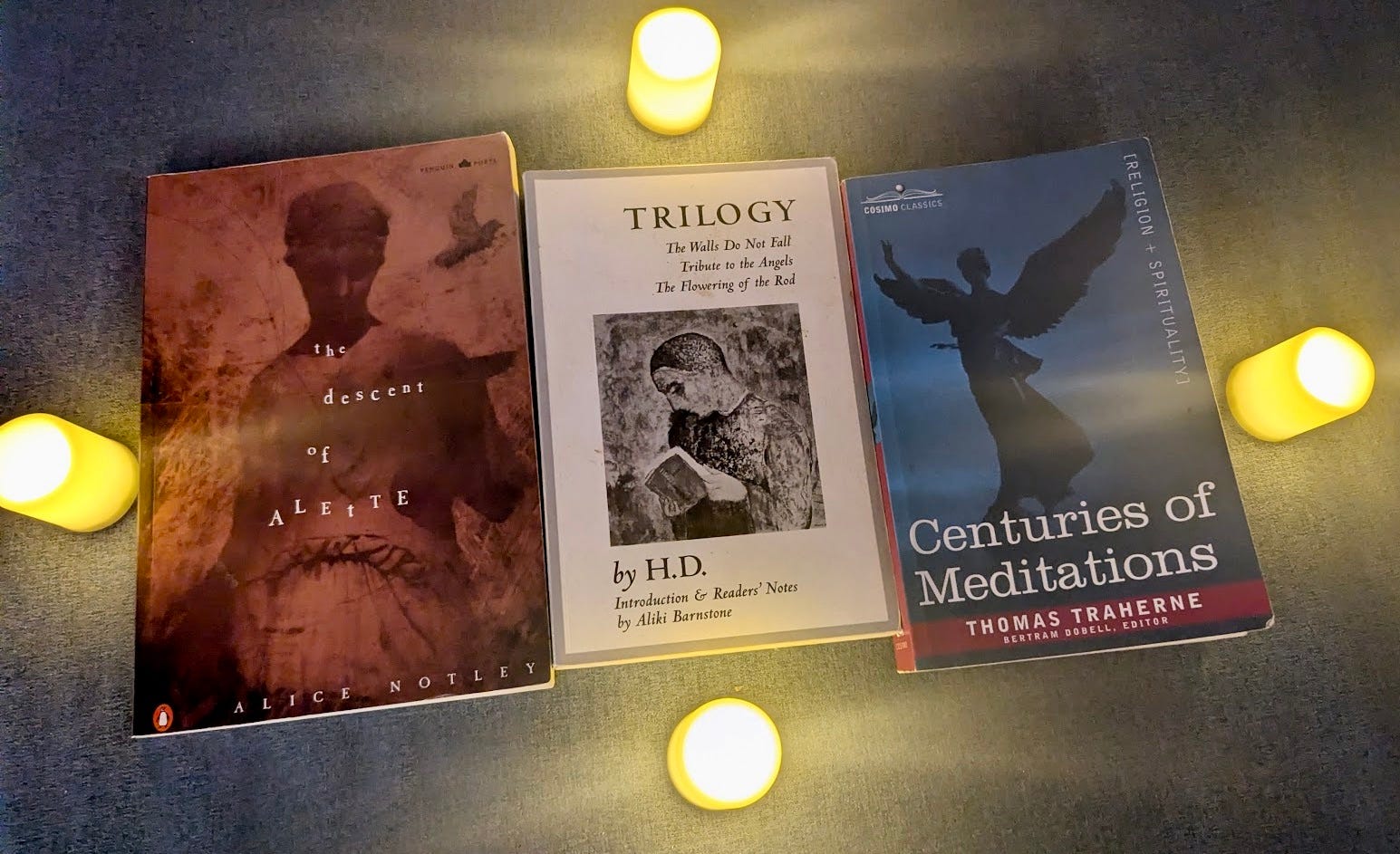
(Three of the books that informed/accompanied this pilgrimage.)
8. Early afternoon’s blond glow. Silken river and I strangely in sync.
Then — as the years outpaced these moments — the conversations between river and path became, itself, another friend to lean your voice on. Then I was moving like ancient water through city noise. Really moving, as if I suddenly understood motion and the colors she instigates! All movement is through the body of Spring – no matter what is dying and grieving, as I have not begun to. Primavera, eternal-sibling season, more than winter, more than fall – Florentine summer in England, and the June bug’s carapaces are teal and brass in the barley-breeze – winged coins of May clouding my beard –the month when Love hits a crescendo.
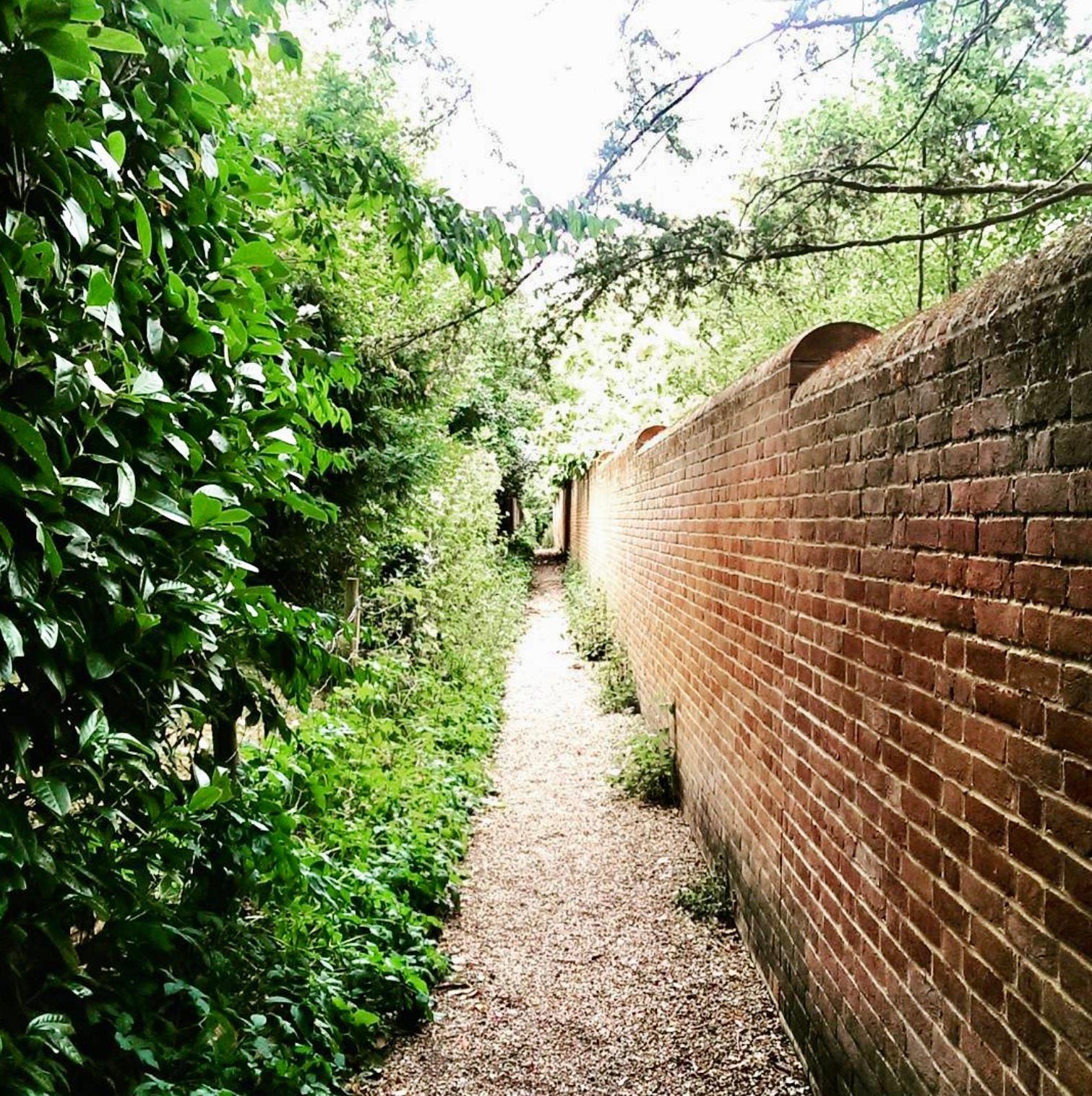
Over the shoulder, I read the book: “Lichen./Lion’s shin, oak-limb, tomb:/all acquire/a hundred year’s/skin (…) and this lovely phrase “An aerial green, white berried.”
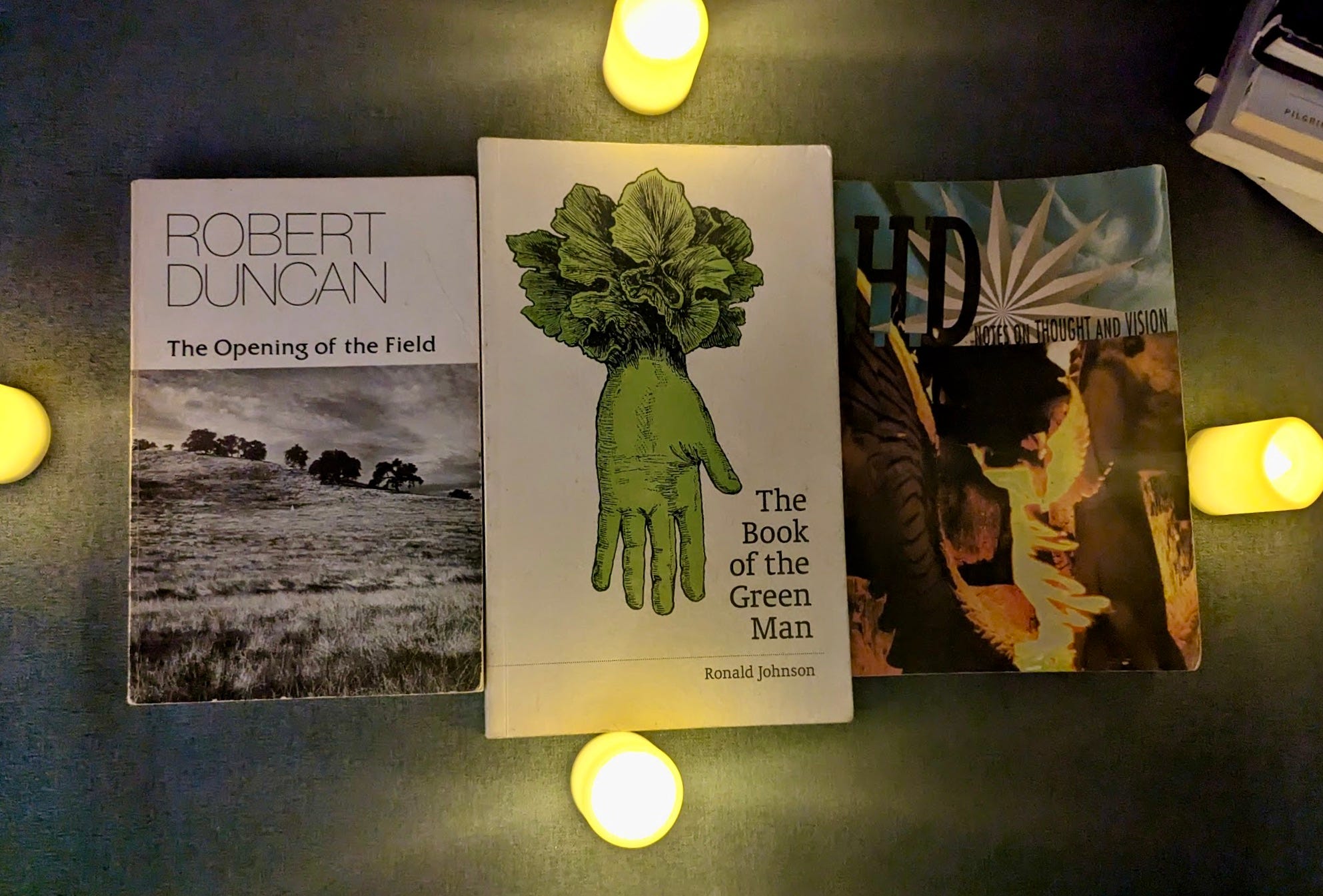
(Three others that were always present — Johnson’s book a book about walking in England and such sublime, earthy poetry)
This is June, and between two red gates are written the sunken prints of wanderers, thieves, and the faithful. Bewilderment, crime, business, and faith: same stumbling at alternating tempos on down-snaking avenues. Who is to say who has the most faith, when they all rub shoulders on the same rough road? Filled with maps that I don’t need-And my heart? My heart is pending.
9. The thief and the wanderer and the bride, the priest and the drunkard and the serf are the chorus. All their histories spectrally accompanying us. The fox’s tail in the foliage – a glyph of future romance. Can foxes get lost? I get so easily lost on the streets I claim to live on. How long does it take until we claim to live somewhere? Maps are crushes which are lovely to look at but unstable and unreliable. And then there are those people who are also maps that help you lose your way. Instead of technology, I have hardy, crafted paper tattooed with gorgeous approximations. All the Vicar could provide at the beginning was a very rough, hand-made map, almost a love letter. He seemed embarrassed but then we all seemed embarrassed not to have reliable coordinates. Maps are art brut tattooing. Lovely and intricate ordnance maps swell my heavy bag.
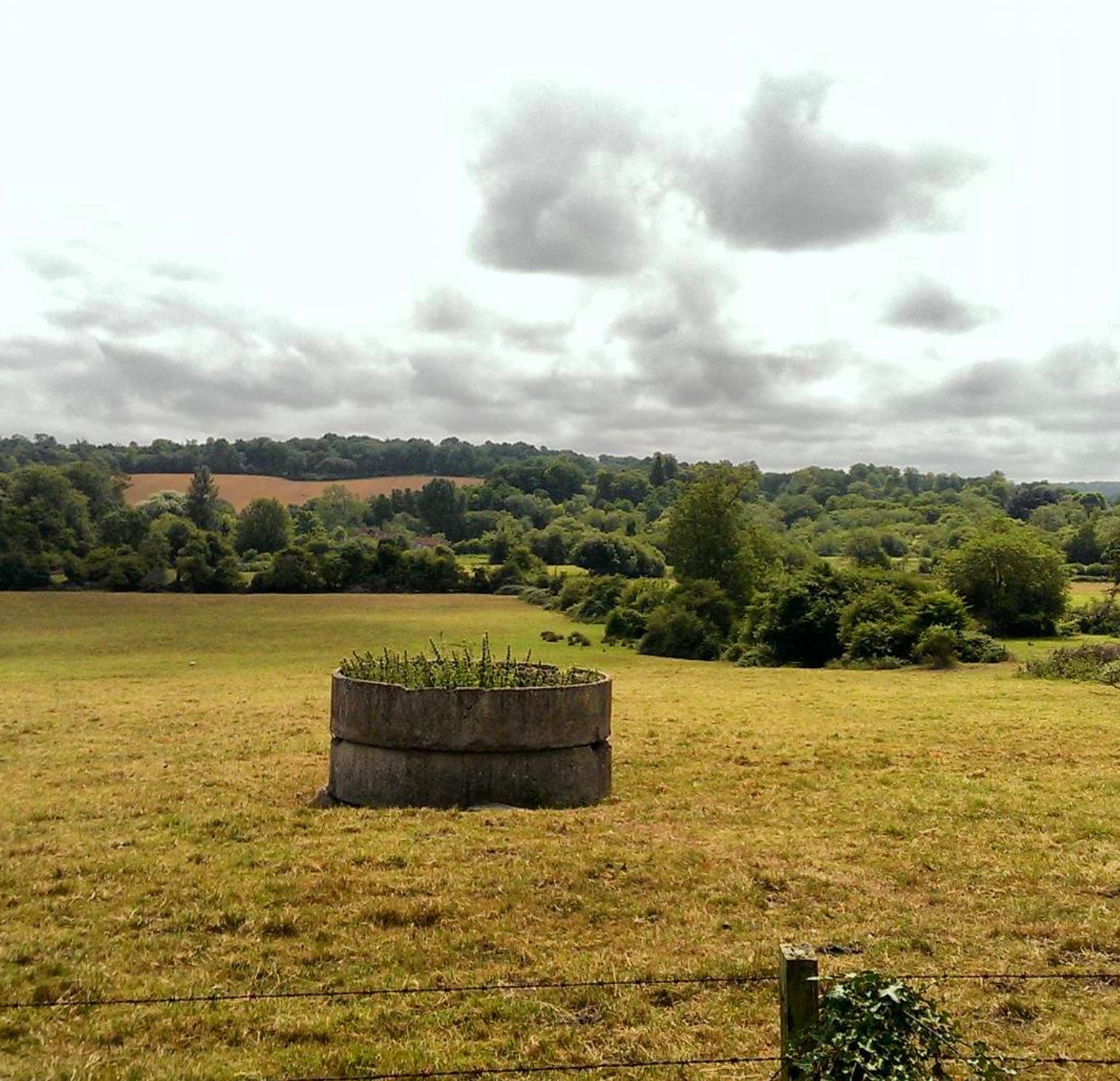
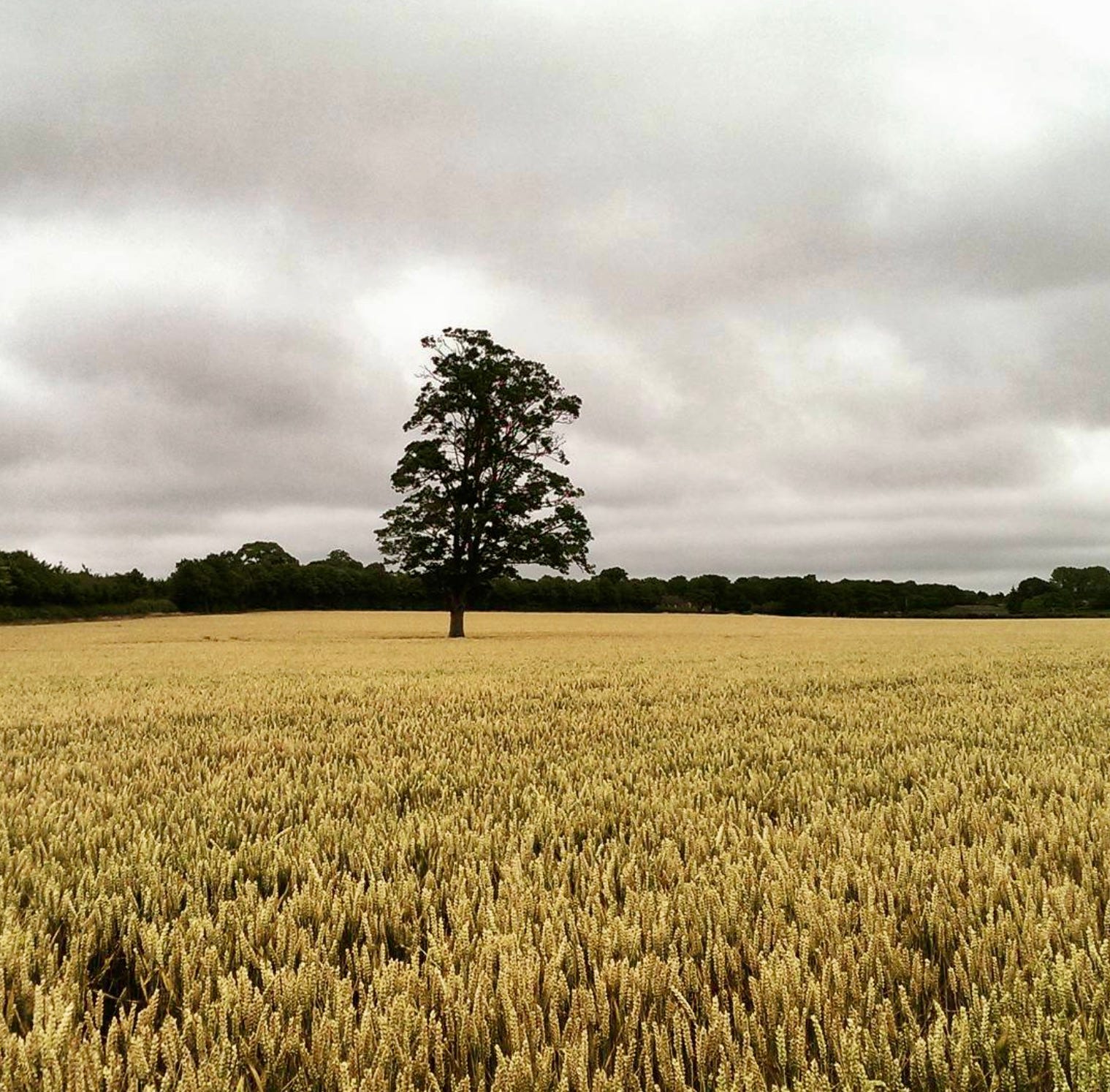
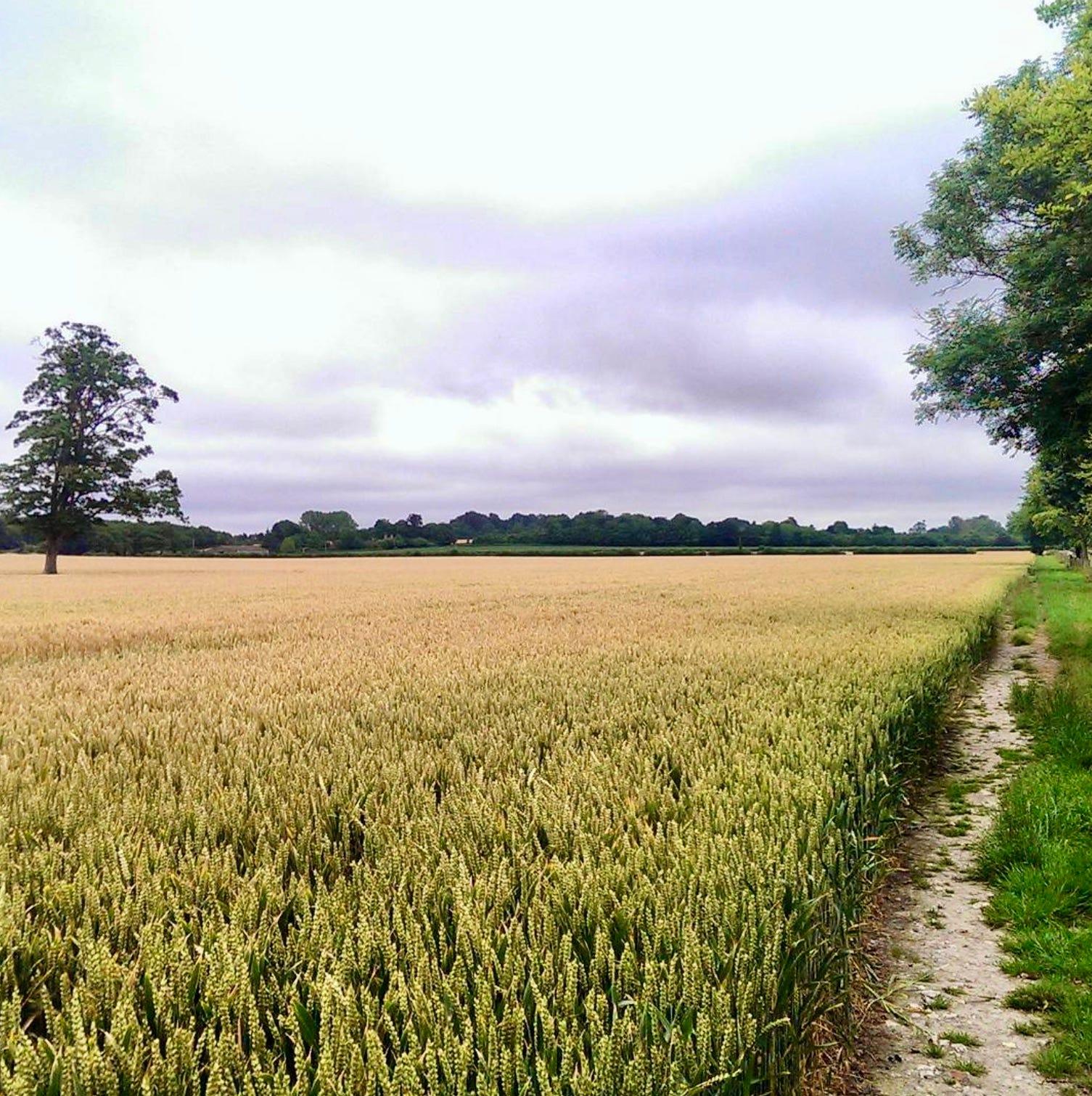
14. Waters recede into red-and-yellow layered pastures – ground is all fast convergences and dispersions – submerged in my own footfalls I scarcely register the slippages until a lone, charcoal-filigreed tree in a gold, crow-dotted field strikes me with its fiery solitude – stop to take photos, of course – evidences of thunderstruck combinations – My own solitude rather mild by comparison – What, alone, do I think? Have I begun to understand my own contrasts? –
15. Slowing the breath, thoughts follow, start to bend and pulse like branches, gifted with a fragile blossom or slime mold. The coincidence is musical, not auditory. If you love, and you reverberate love in every corner, shit is no detriment. Beholden to the cosmos in a cow’s eye or a painter’s hands overflowing what I can tell about any whole—which is already almost nothing.
And why write when one can walk, scrawling the way with chatty Boots?
16. We who love words, the great romance is with silence.
Which hasn’t happened yet. The courtship is interminable. The hush I’m finding as I move, still human, yes, as I hearken to what I could have been, the hush is all the books I ever read in their original timber. Still unable to exceed or quiet myself. Even among all these un-sortable branches tending toward quiet. The wood-world is all leaf, wind, pebble, rustle. Blossoms luring us in into wordless roaring spirals.
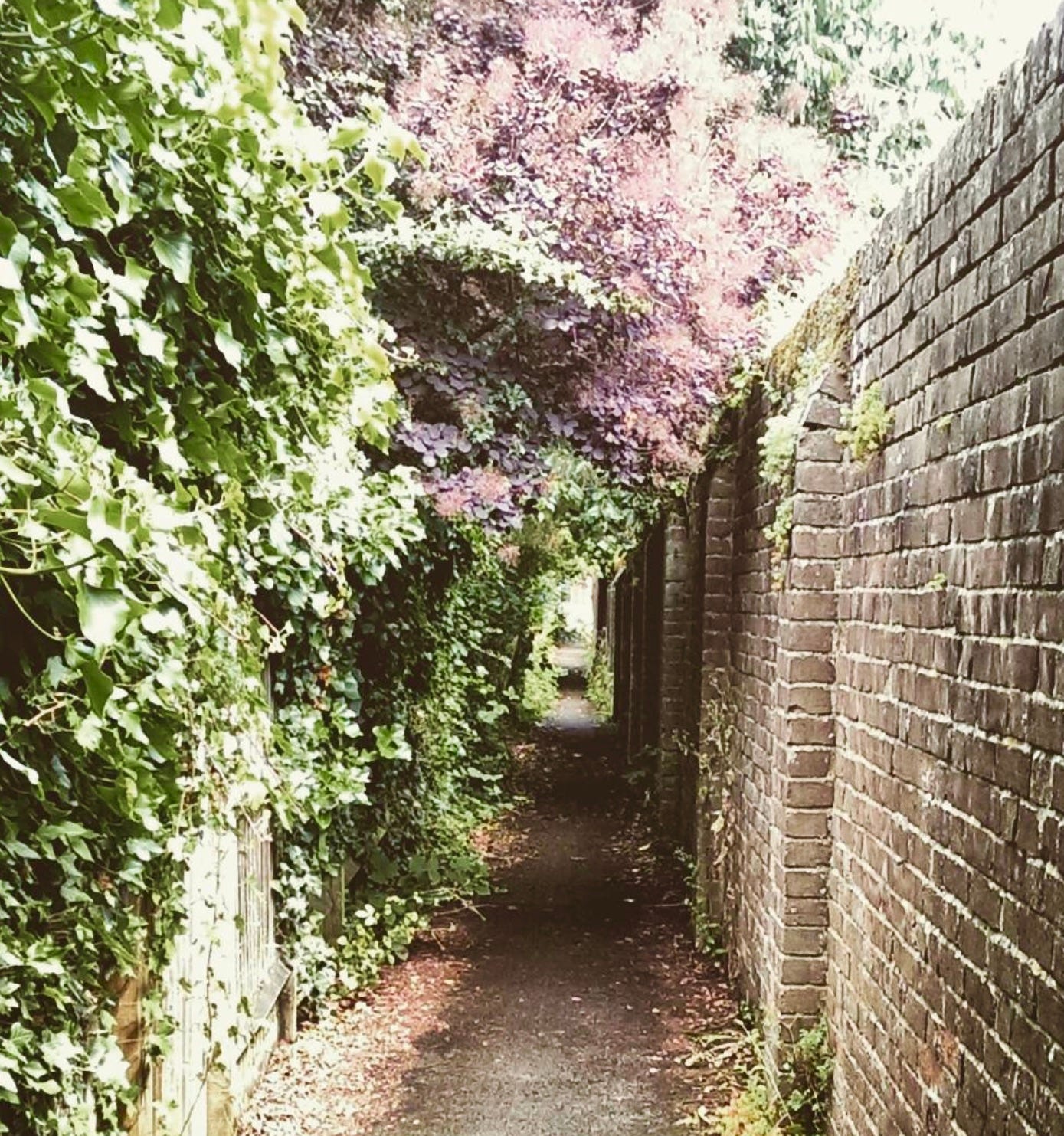
17. Winds and streams with their subtle harmonics. The currents undergird the wind with velvet coolness. A maple yellow hush muffles the mind. Or reopens it in unusual ways. Some minds act viscous, others twist like rapids, and still more flow in unhurried streaming over crags and gulches. I want to track the minds I loan to these meadows, these tawny hills and gravelly roads, minds I haul like ballast along these ancient ditches, along these ancient *harroways* -How I love this word.
Minds that were loaned to me by other fields, nearly resembling these, by other minds that moved like fields over me. Minds that yearn for half-hidden paths; or ones that needs obvious paths.
Psyche is a maze of grass.
20. Today’s trail is hair-raising and hinter-landish. An obstacle course but more improvised, contingent. We are deep in sheep country now, my darlings. The need to say We as if my Bag and I are now conjoined. But I’m already carried in the immense rucksack of voices and guides. All my bag can aspire to is but a fraction of your scavenging vessel. But more than the Bag: the Sky, and her reverential Grasses translated as Clouds. These are the sky’s fields for they shine with Her spring tints.
Earlier this morning I wrote: “The Heart is a burden lashed to the Back” – and I wondered how the heart/the soul is a gift and a burden. To grasp this must be an athletic encounter – thoughts now muscular – as in Artaud, who I can’t imagine enjoyed having a body, but lived dreaming of ways to exceed it.
Thinking: mourning our inability to become trees.
21. We know that they communicate at all levels: terrestrial, chthonic, celestial. That they are as rhizomatic as they are arboreal. Their root-world is poem-work roving across all distancing, discoursing. Any tree is Hekate, the Three-World Navigatrix, where Three is an unmeasured but disciplined “open relationship.” Leaving, a verb of intricate entanglements. Mind dapples in the wind.
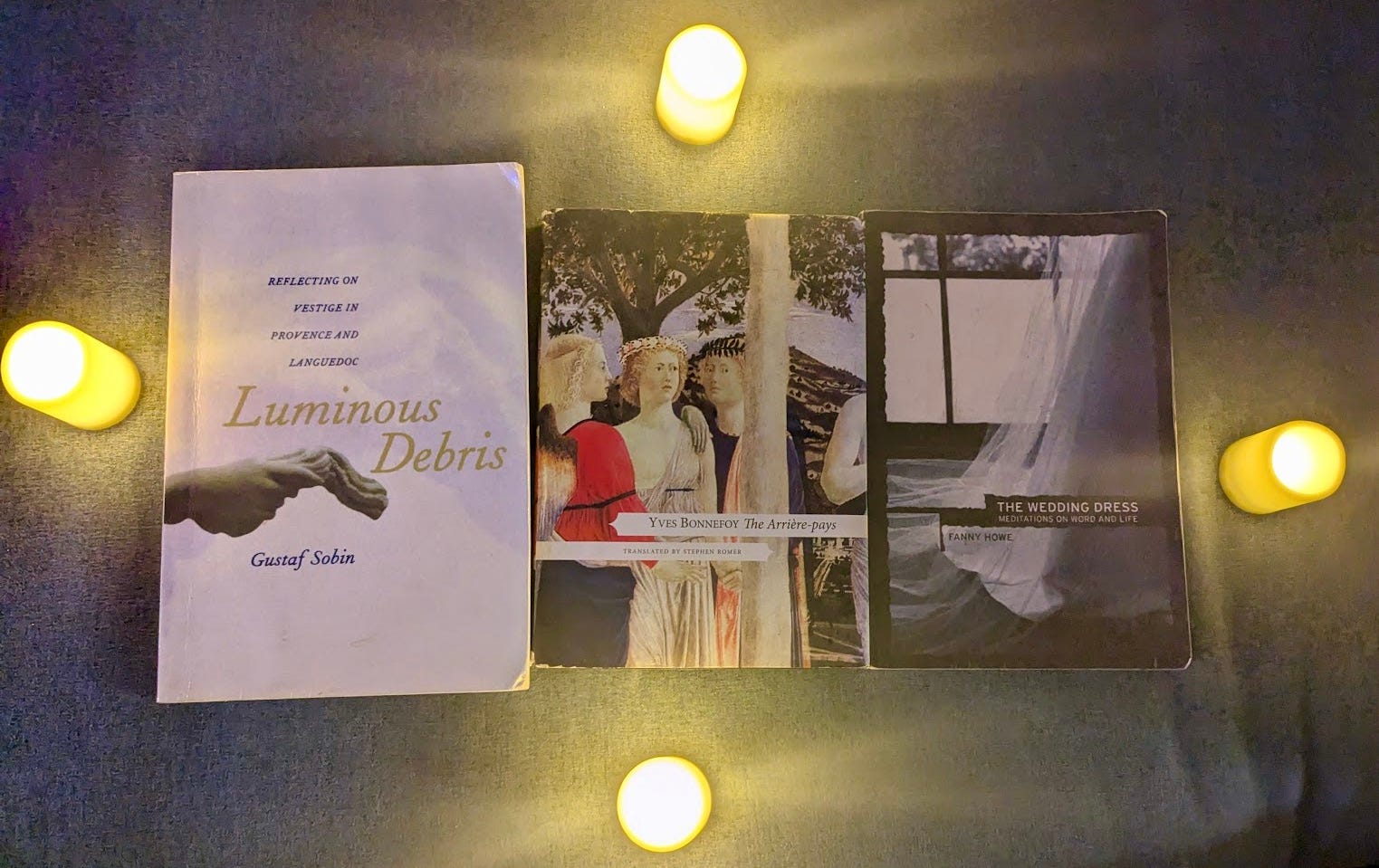
(These three prose books by poets were the most formative. To think about them in dialogue is a longer essay. Each book is a wonder and an exploration of what it means to journey, to excavate, to pilgrim.)
To any place bring a mind as occasional as the leaves, the chalk, the yews, and the streams – along rhythmic paths hugging salt-edges – a grove on my right clustering up a round auburn hillock – realize memory as myth, fiction as food– glance into the moment only as it sinks – into tints of cabbage, bronze, oak, and quartz – the alchemy of this passage or corridor – I live somewhere – on falling foot and sweating back, driven by chatty heart, gossipy lusts, penitent mind – near the sky yet not quite in it.
How close we’ve come to certain souls!
How close I’ve come to my own, which is not mine. You want to believe at every moment there is joy in not having a soul but being had by souls. All intimacies embryonic. Now, here, down this unfurling trench, into Leaf’s ever-widening mouth, ever more branch-cradled, our proximities are immeasurable –
(given a quick glance: all is leaves)
My mind is a guttering candle cupped in a gathering breeze; she gathers my thoughts into the shapelier flames of Others. What is that sensation crouching between two oaks? Looking like the color of two minds blurring together in urgent enigma.
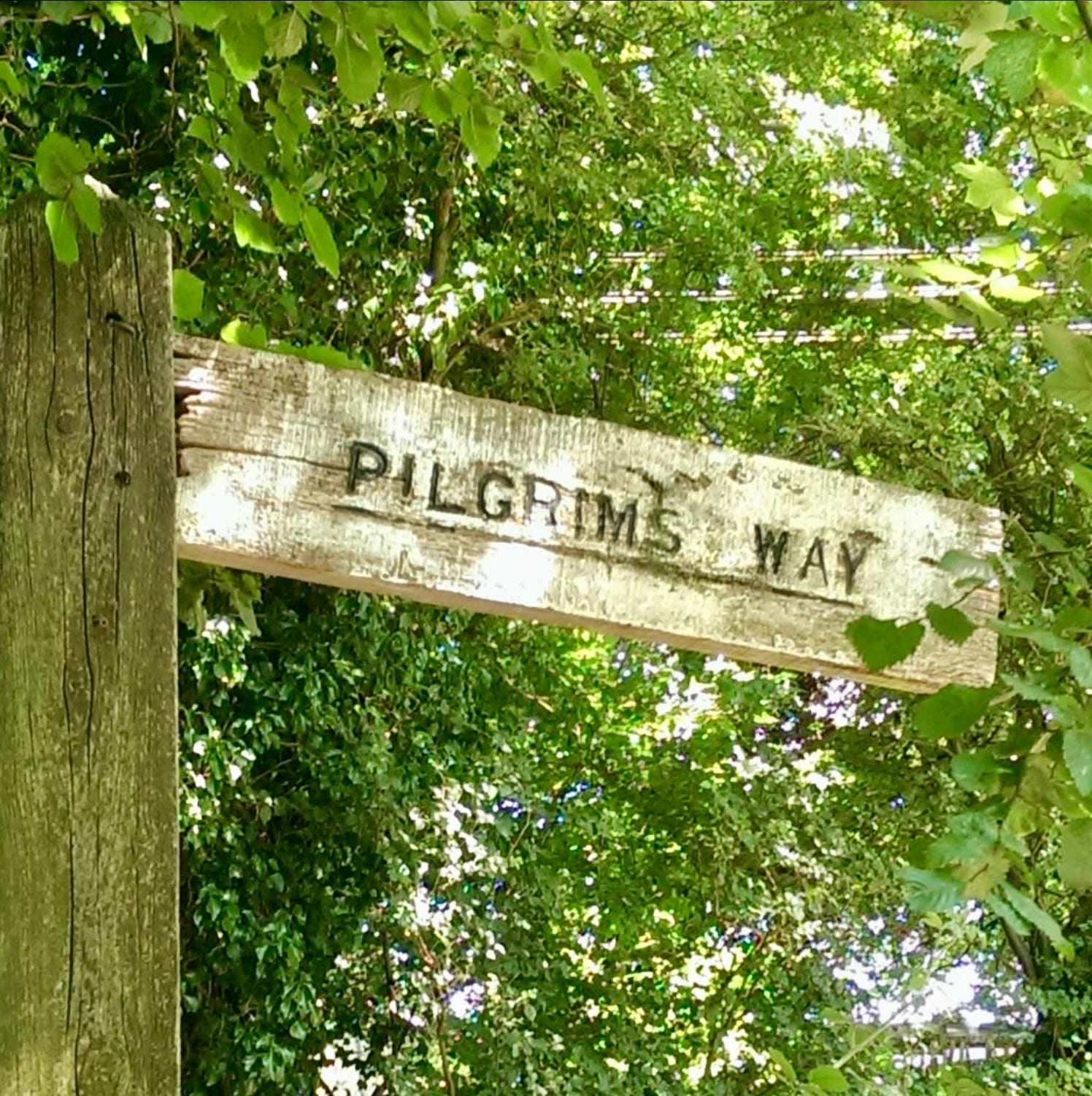
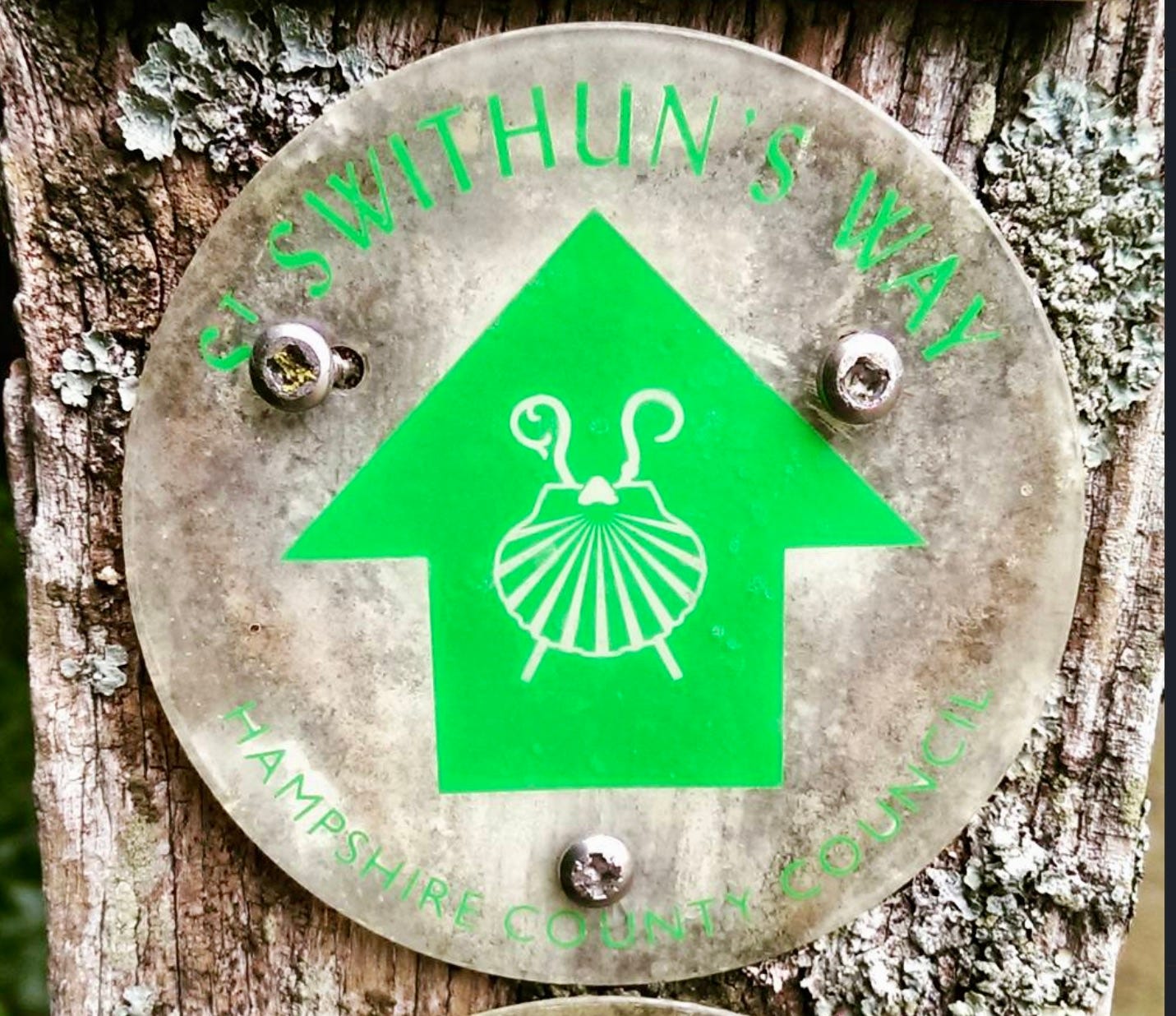
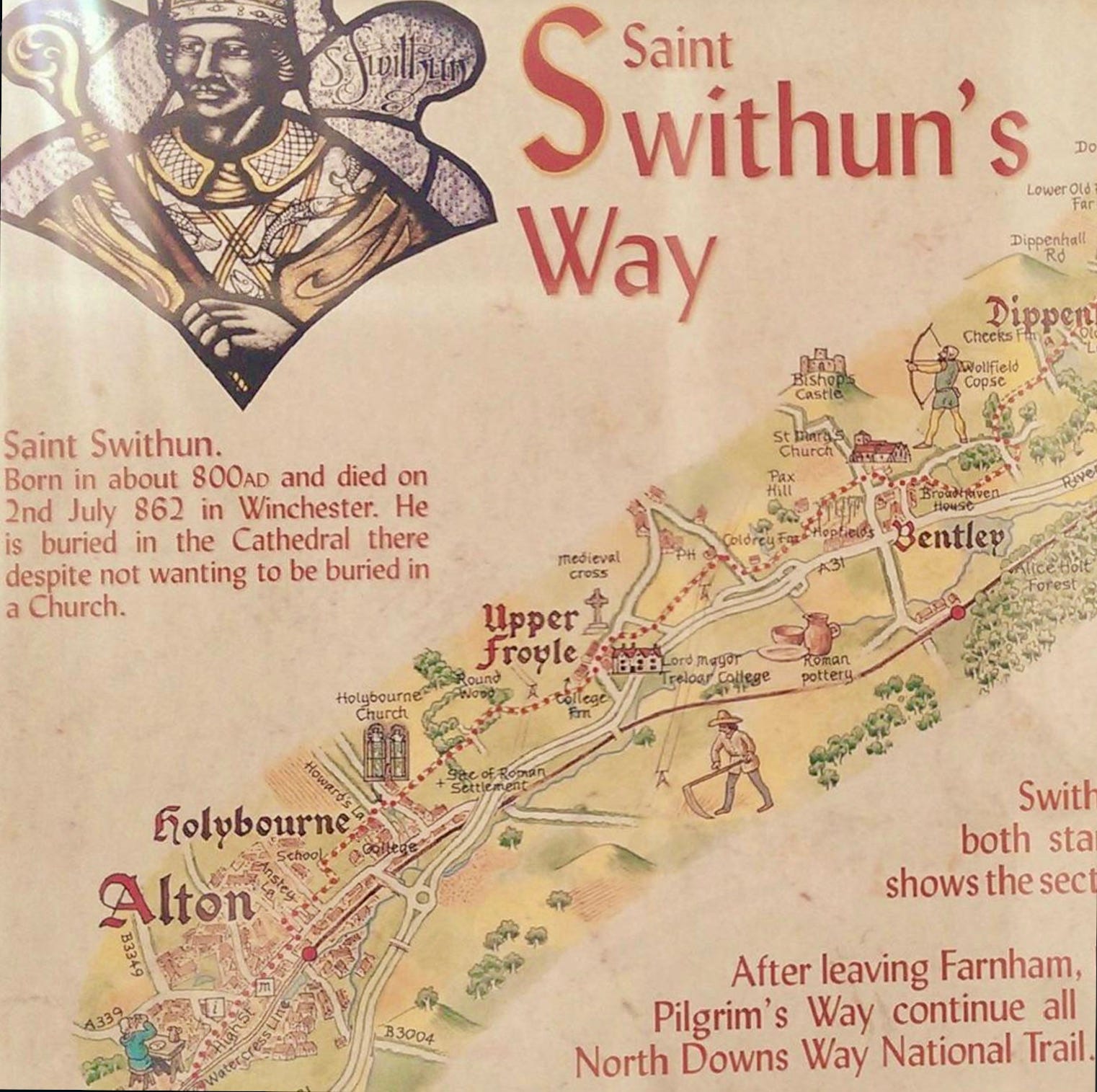
A question persists: Is there a real Pilgrims Way or is it really Saint Swithuns Way and North Downs Way? Might I be the first to do this as I am doing? Each Way overlaps into each, until the other recants its identity. Often, the Pilgrims Way becomes a ghost under a highway or a hedge. Certainly one trail is better mapped out than the other; one more distinct than the other. For each you will know by the emblems: the green shells of the peregrine, and the green arrows too. Walking I remember the poet Bonnefoy looking at the paintings, reading the Egypt book, haunted yet eddied onward by the Phantom of Presence, by the navigational backcountry always directing him and always hidden.
28. But for the birds that mingle with the branches and blur with the leaves, and the smaller mammals I cannot detect in the undergrowth, I am alone (yet accompanied). I yearn for mysterious gates to slowly, furtively unlatch. Or at the least, to reach their thresholds and linger long in the delayed (decayed) fantasy of opening them. The slow timbre of gates is exciting, like the pulsing click of a compass on a sparklingly clear night when the Milky Way flows overhead. An interior gallery of heart, I want to unlatch, as if I sense, have always sensed an opening there, an embrasure – such words are the dowsing wands for sensations that are prophecies. The verbs that reenact this journey begin to sound strange again. The Way: constant and unerring, even when missing or just hearsay.
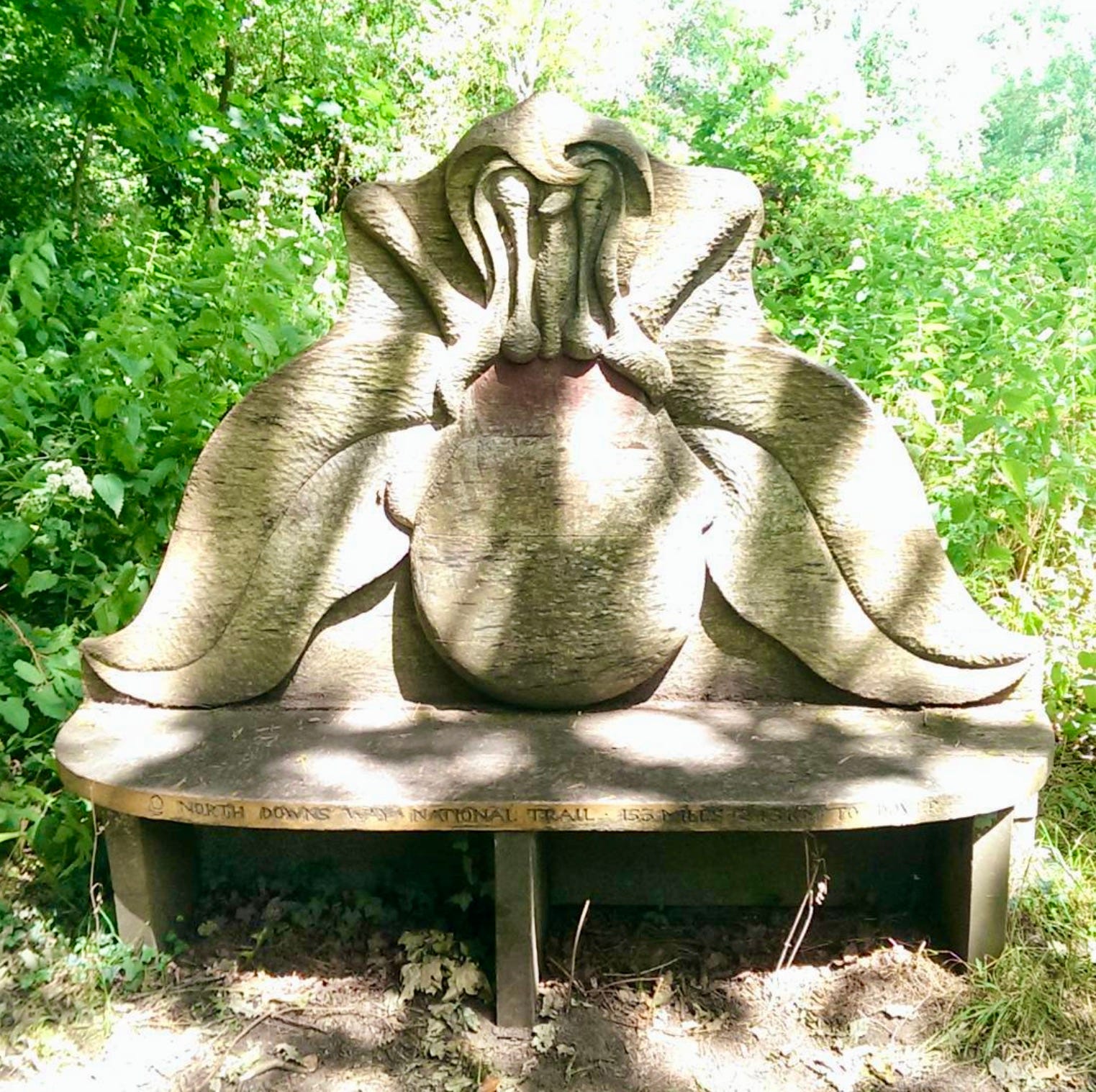
36. Doubts about whether we are taking the “right way.” To apprehend The Original Way. There are Originalists and Contextualists out here. My motives are transposed onto this Pilgrims Way even if it’s not the right one. I love that the “original” route conceals itself, unravels from the main route. It persists more as legend than route, having succumbed to construction, to modern modes of erasure, concealment. The legend tugs at the soul. Some village was built over it. Some shop now sits on top of it. The Old Road is not there anymore except in rare, indiscreet edges or scraps. The feeling as I take to the wavering chalk ridge is that down below me, perhaps behind those tall black-green hedges is the more authentic way; or a more rarefied path that always accompanies me, and that, occasionally, overlaps with whatever more pedestrian way I’m on. For the book says this can happen: a fact I only register later, after the original way has torn itself back into hiding and secrecy.
37. A half-concealed path always accompanying me and that, sometimes, I might walk on: this image is a comfort, as much as a lantern resembles a friend.
This comfort echoes my astonished reading of Bonnefoy’s Arrieres-Payes, his celebration of the perpetual hinterlands that he is always seeking or apprehending. The Hinterway, then, is my version of this vision: a trail that is very old and very storied, that has been anointed by the feet of the strangest of wanderers and outcasts, infused with the expectations of glorious quests; the undisclosed passage that forever haunts whatever path I’m currently on; not that the actual path I take, by choice or circumstance, negates other, untold paths but that a few of them, like the Hinterpath once in a magical while overlaps with them.
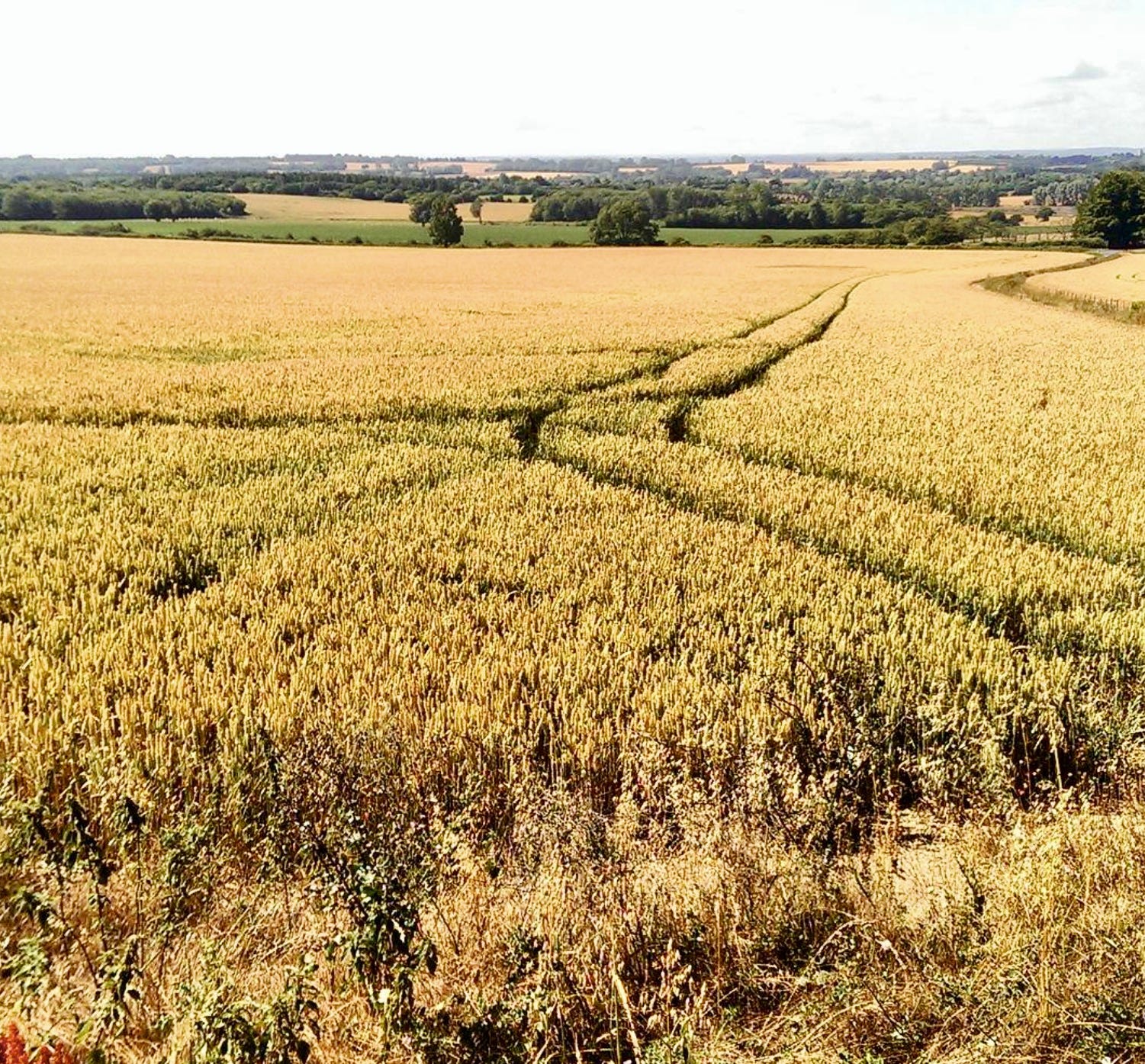
We want to journey in such a way where the subtlest paths seek us out. Give away all books save five, keep one sturdy iron pot, one rugged knife, one satchel that can hold only trustworthy and time-tested things. And then set out towards the roots of the situation or forest or meadow. A problem is waiting, so are friends and codes. The knife need only be symbolic, whereas the bag and the pot will be put to daily use. Wear the kind of jewelry that will arouse the curiosity of swamp sprites. Write down only the names inside the names. Entreat moss and bees and foxes and moles. Surround yourself in contrasting fragrances.
38. Initiate of Apprehension.
You taught me that the skin’s strength is in its infinitesimal mosses, her finely woven grains. Apprehension is precise: meaning first to grasp and to seize; but then it seems she began to mean something darker, to be grasped, to be seized. Subtle winds.
39. Chapels along the Way.
Holy interruptions: chapels and churches – cresting hills – little benches with ruminative men and women drowsing on them. Between stone and stained glass dwells another silence, a heightening of nature’s buzzing quietude– lens to feel silence more – the word “between” or “betwixt.”
40. Contrasting hues.
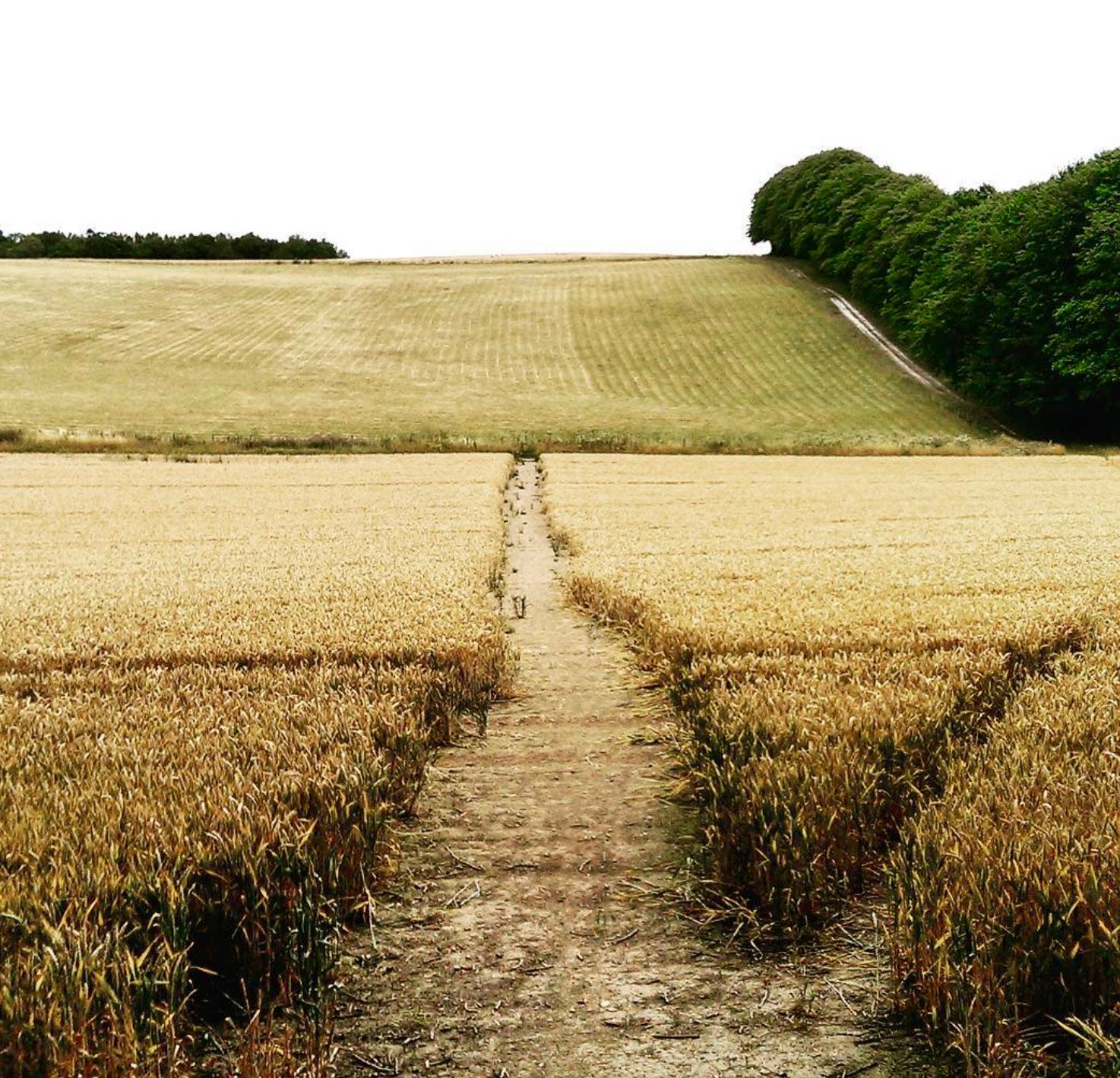
Sea-undulant cornfield. Inkblot birds on quill-shaped branches.
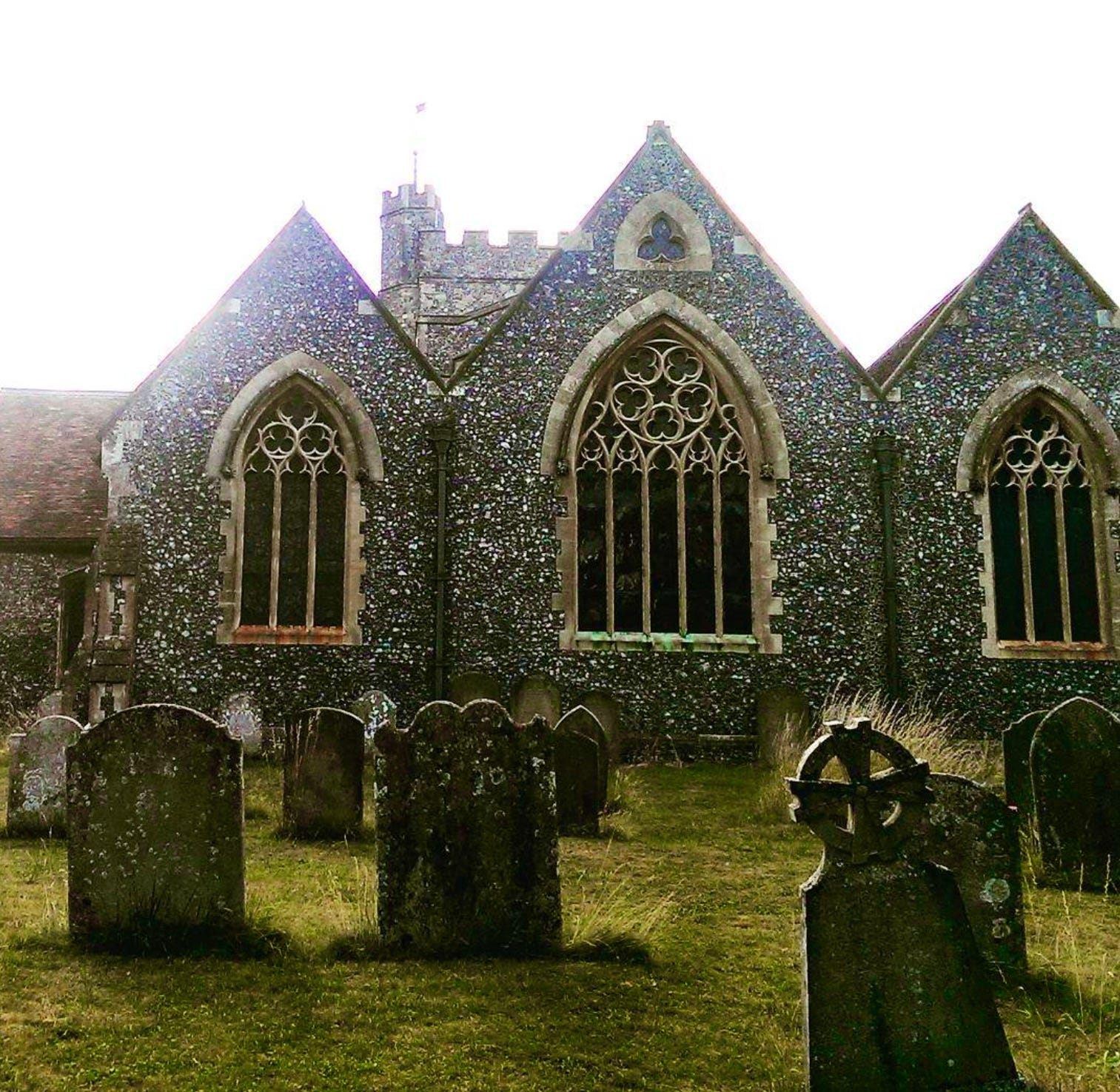
In the gloom of the old chapel, among the crooked head stones, nearing twilight, autumnal black birds huddling in grim rumor. And I’m reading happy prose about God and Her treasures she has given us. The labors of the Ecstatics: like Thomas Traherne, 17th century metaphysical poet, as my mentor said, a strange precursor to Thoreau and Dickinson. His prose poem masterwork, Centuries of Meditation reads as if it was written on a long ramble through England.
Reciting Traherne, thinking of Hilda, smelling San Francisco, conjuring every lover.
Divinity explained in the lingo of desire: insatiability, treasures, ecstasy, bouquets, fountains, gardens. So innocent: “To make the best things most frequent” and the best things are really keeping to the way, giving attention to the paths, contouring passages for others. As well Traherne’s ecstatic theology necessitates others: Images, Companions….” Want being the parent of Celestial Treasure.” Reading Traherne in dusk cemeteries, writing in the margins: great beating of wings in the trees at twilight, edges of the graves sharpening, not wanting nothing else but air and light. “Every morning you awake in Heaven…” pg. 124 “diversity of other persons.”
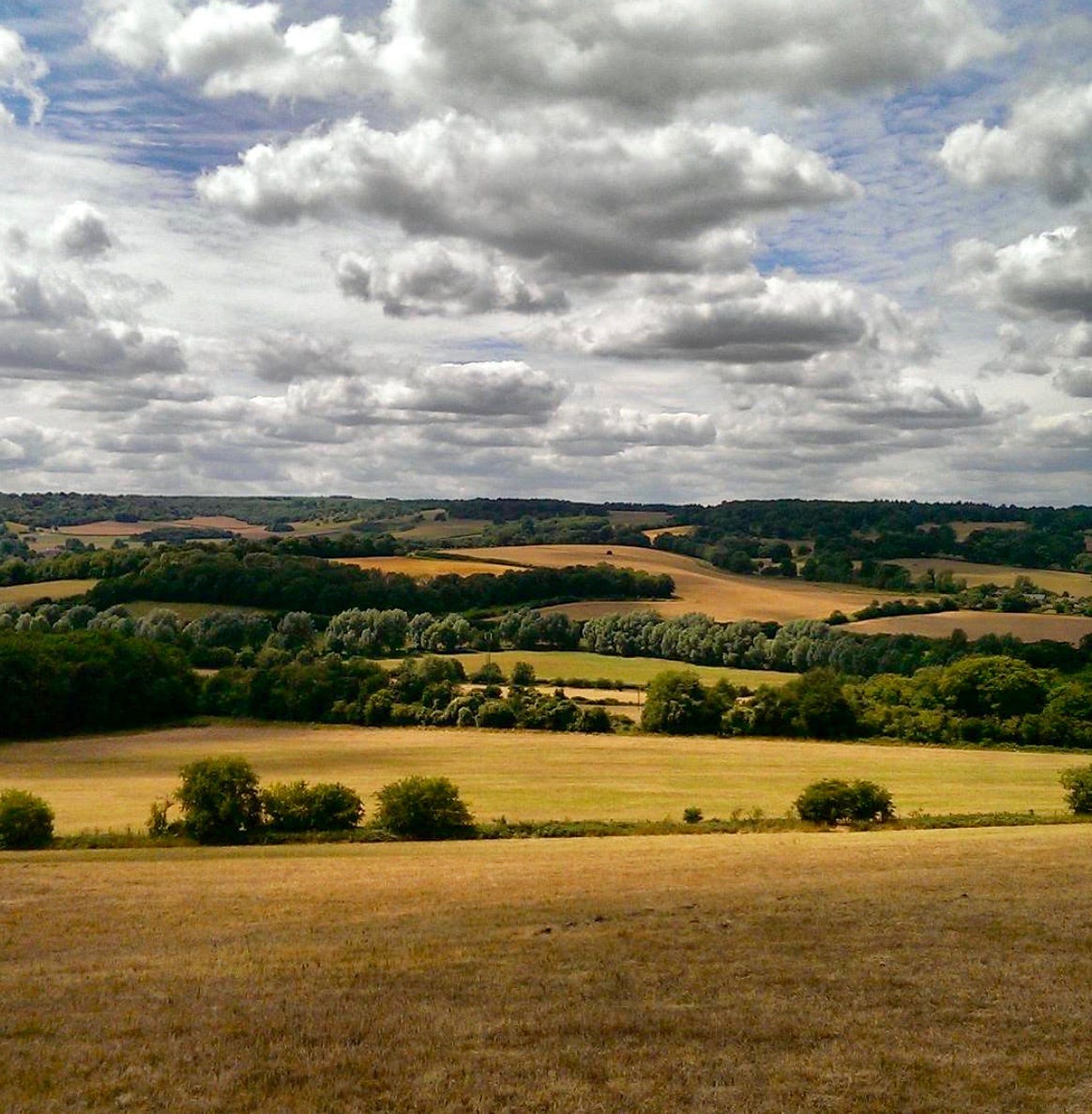
41. Merstham to Sevenoak. For two miles I walk slowly, breathing deeply, because I’m out of water, although I probably could have begged water from the man in his yard. Living in cities makes me reluctant to ask a stranger for anything. That’s another way to heal a city: not be afraid to ask for water and to give water. But I do not. The couple at the train station confirmed that I wouldn’t be able to get a train. The bartender, as concerned and conscientious as everyone else I had met, called me a cab, while a long-time regular, Gordon, who lives behind the bar, bought me a pint of ale. His friend said: wow, he hasn’t bought anyone a beer in over ten years. It’s because you’re a pilgrim. Disruptions can be met with a cool heart and insolent gratitude. Demanders and interrupters can be met with magical nonchalance. The walk to Wrotham notable for a glorious overflow of Fields, with luminous indigo clouds terraced on the sky, deepening the sky’s reach and range, Sky reaches you, finally, the endless umbrella.
A word so evasive it makes room for loving.
42. The Bull Hotel is 500 years old. The bedroom is heavy black oak, panels of cold boulder, part dungeon, part brothel, temple of strange rejuvenation. Legs remember ruffling fields with their little gates for mouths. They forever repeat, but they are each different, infinitesimally singular, each field mothering its own precise galaxy while still closely resembling the one in the adjacent field. So many sunken lanes of flies and mosquitoes, but then: ruby-red butterflies curlicuing in the air! The Bull Hotel is a place to love old feelings.
43. Childhood ghosts are inhaled.
When the weedy crest goes violet by the hidden sun, a familiar musk arises. I remember this night-smell from my roving jaunts as a scabbed-knee California boy. Somedays it feels my life reaches a peak when I’m breathing in moonlit trenches where mold and celery and camphor grow – and it is hard to keep a record when your mind and your feet are outpacing each other. Seminal affinities. One is full of leaves trying to flower, the other full of wings straining a carapace. The skin effects of the word, sensational: my intestines stir, shoulder blood dances; baseball field webbed in moonlight; humming coyote caverns; the boulder labyrinths of a coastal, misfit’s kingdom.
Another fable tells us that the yew trees indicate the location of a pilgrim’s route. They are planted to signal a path or way. More thorough evidence suggests that yews just love growing there, as pilgrims might love walking there. If love doesn’t intentionally show us a way to somewhere else, we still follow what we intuit, which turns out, in the end, to be love—
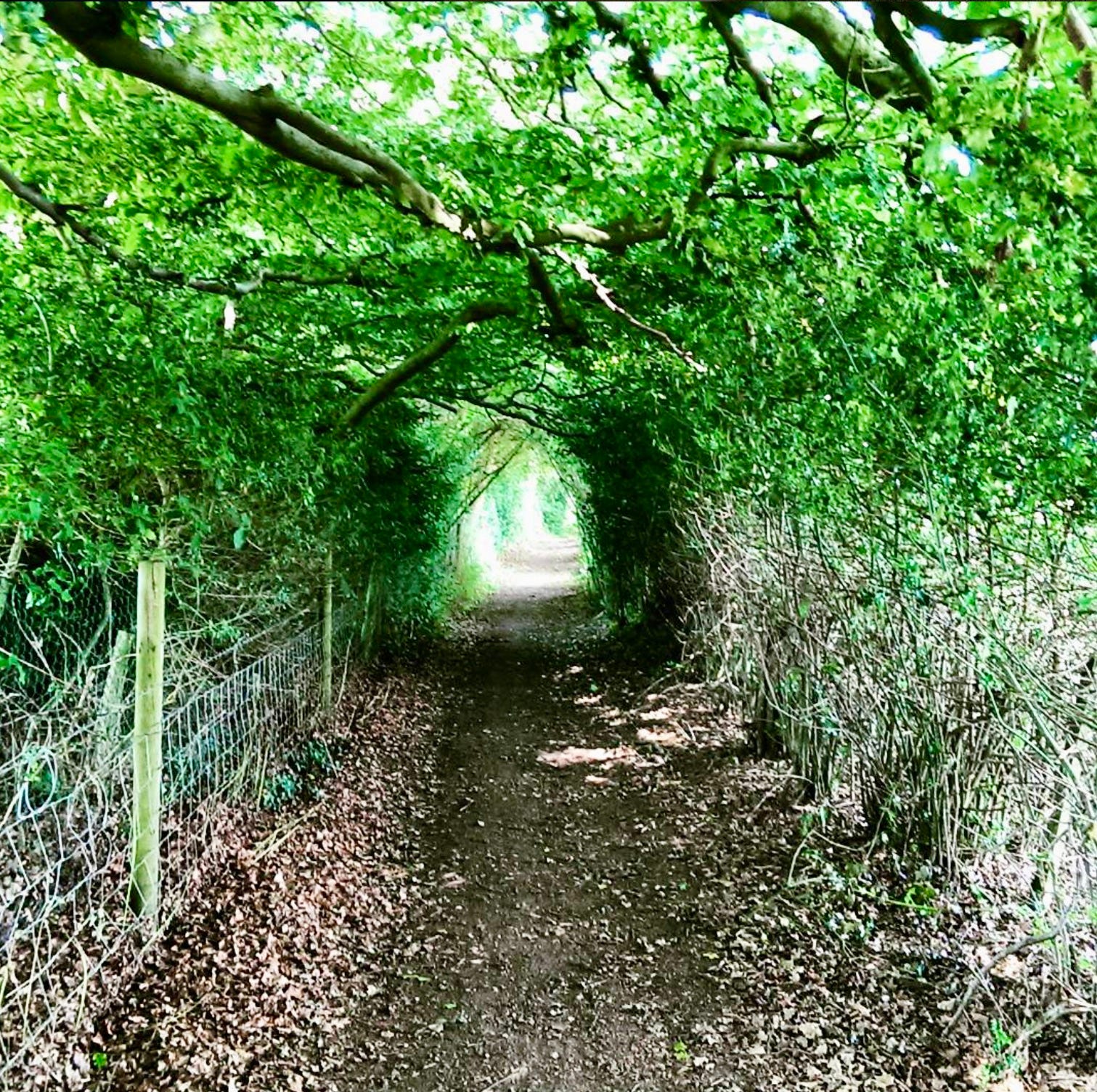
Land sensational with insects and blossoms. Prismatic cloud-paints. Exalted by the ancient word Sensation its refusal to become an idea – moods and impressions exist that pass through a body from the outside & from the Inside’s Outside -– as if each hill’s color, and each nerve’s eye, augurs a changed feeling and a charged impression – this valley contaminates me with color alone – warm yellows and cooling purples. Emotions. I sometimes feel are less ancient than Sensations. They sometimes feel like manufactured feelings – not the immediate inscape gifts of land and cosmos.
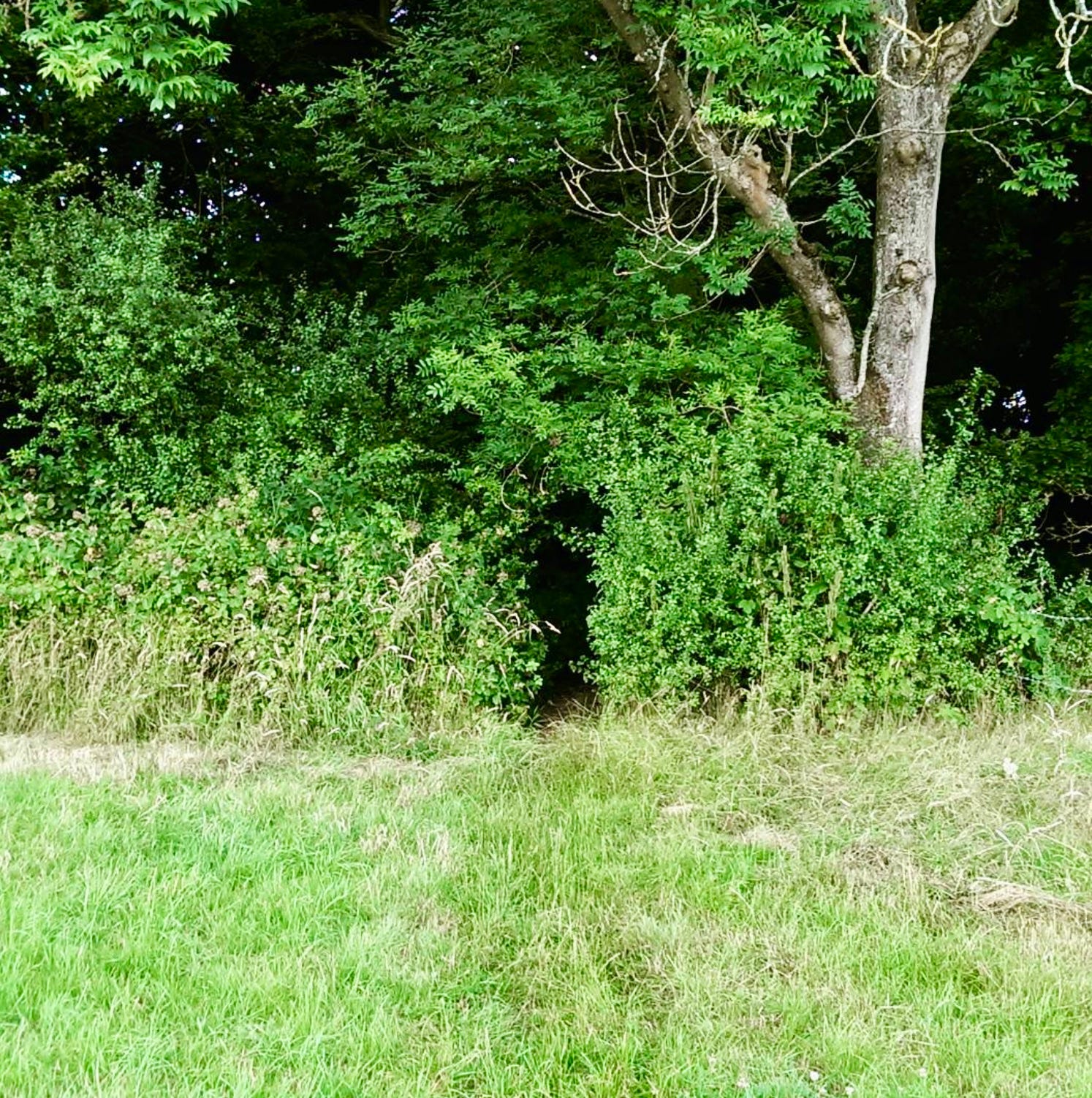
58. “Waymark posts” where signs are. Fingerposts: tall posts with fingers indicating the direction. “A chevron in the relevant color.” Oak Fingerposts. Some are in the process of being “signed.” Stone milestones along the road, like tombstones, engraved with distances from origins and distances to destination. An exit becomes an incantation. In Alesford there are four tea rooms and five pubs; River Itchen possibly associated with Celtic goddess Ancasta. A lone inscription testifies to the existence of this goddess.
The name is ancient and the meaning unknown.
60. The Way is actual and walkable, and the way is also a diagram for other actual events and passages. Allegory and actuality all mixed-up, imbricated, contaminated: this is why it is good to walk, even if it’s just your mind or your heart that’s walking, while your feet and ass are idle. When I looked at my pocketful of flint I thought perhaps this is it, all I can take from this journey, all that must remind me of what I had moved through, listened to, and felt astonished by. And slowly, when I got home, when I found new homes, the flint will flee from me into the soils and gardens of other moments and movements.
As it should be: rocks and shells held firmly only to fly.
***********************************************************************
End: In the Cathedral, I arrived, “completing” the journey and I made it for Evensong.
Canon Clare greets me, embraces me, and, because I am a pilgrim — how I embarrassingly present myself as such!— she leads me to the normally barred underground many hundreds of year old crypt chapel dedicated to Mary, and before the Blessed Mother, she prays over me as I quietly weep (not so much for me, but for the Dead I love and loved) and in her prayer, the part I have never/will never forget: “May you tread lightly on this earth.”
Remembering, as I leave, and as I always begin to leave, Traherne: “Your enjoyment of the world is never right till every morning you awake in Heaven.”